
LP7 MEDITERRANEAN LISTENING TEST AND TEMPO
November 13, 2020 § Leave a comment
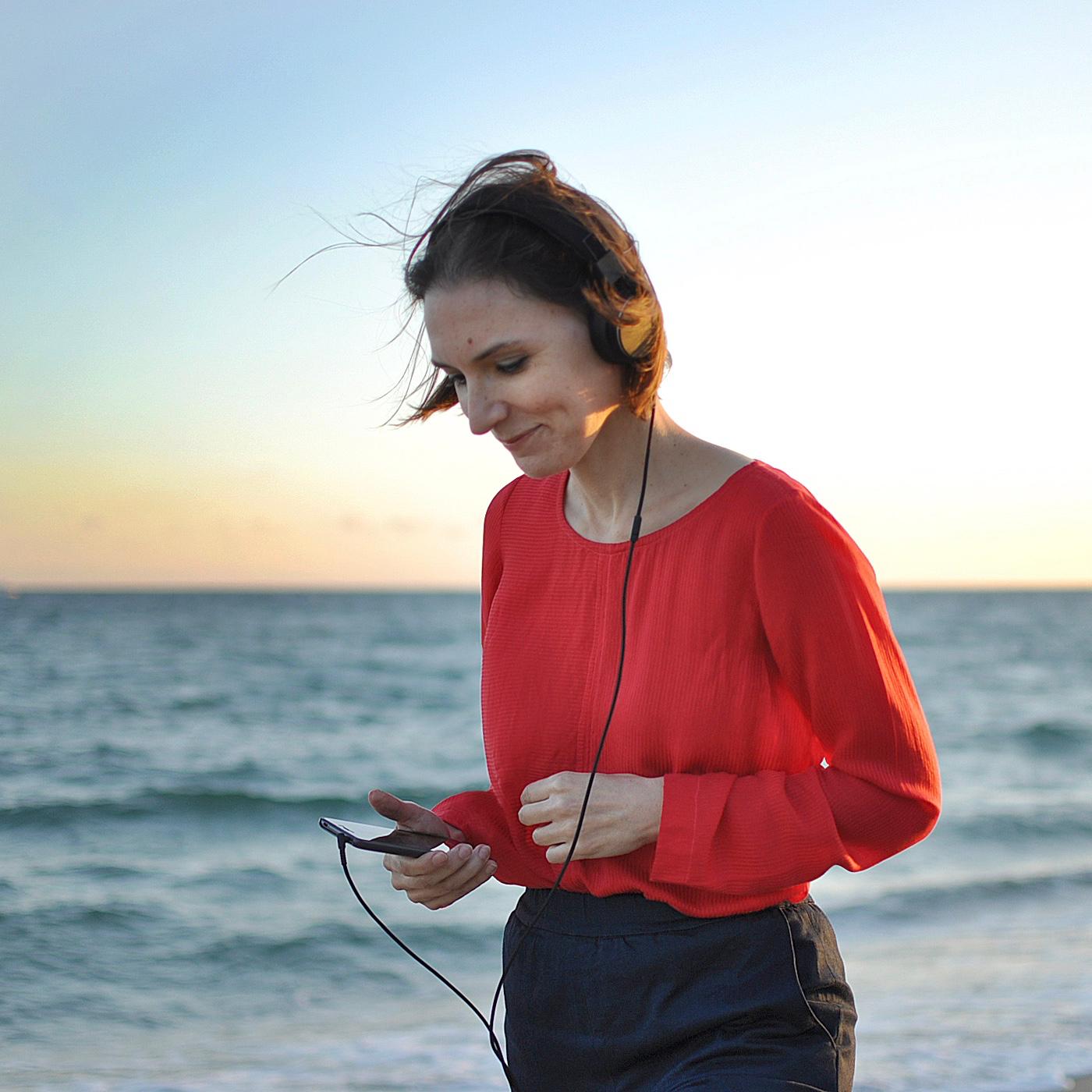
I am about 2/3 of the way done on recording my new album, so yesterday I took advantage of a daytrip to see a friend in a small coastal town to “public-transport-test” (the roadtest version of people who don’t drive!  ), then “stare-at-the-sea-test” the finished and unfinished tracks as mp3s with my Urbanears headphones.This is a ritual I’ve always had when making albums, trying to put myself in the position of an imagined listener, but since I’m still the one who created the music, I approach it with equal parts dread, equal parts excitement: by that stage I have already carefully listened and decided on final take(s) – spoiler: I haven’t managed to record every song in one take as I was hoping I would – and made a rough mix, so theoretically there shouldn’t be any terrible surprises, but these kind of listening conditions have a way of removing detail and making salient parts jump out, so it’s definitely a moment of truth.
I was a bit worried about issues of tempo: I don’t know if it happens to a lot of composer musicians, but it’s sometimes really hard to determine what is the most fitting tempo for a song (I typically start with slower tempos when I first create songs, but that’s often because I’m actually still learning the instrument I’m using!). With this album it’s been particularly tricky as the tempo is sometimes purely marked by the way I play the keyboard with the Space Echo doing its own magic on top, which means that if I’m nervous/overexcited I do tend to go too fast (in much the same way an artist will play faster live). But the Elka Drummer One also sounds pretty different depending on speakers and headphones : obviously my Blue Sky nearfield monitors are my point of reference, but even then, because my studio is so tiny, the subwoofer placement is what it is, and moving in that tiny space hugely changes my perception of the sound, which in turn – pretty amazingly – changes the perceived tempo.
In any case, I think my face says it all: the test surpassed my hopes.
MIX RETROSPECTIVE – 2006 LA NOCHE INVENTADA
November 2, 2020 § Leave a comment
2006 was a big year for me : I got my viola da gamba, recorded Colleen et les Boîtes à musique, in summer learnt that I had been granted at the last minute a one-year sabbatical from my teaching job (which led to my resignation the following year), in November went to Japan and totally fell in love with the country, and in December recorded Les ondes silencieuses! I had a big obsession at the time with John Coltrane and listened to a lot of sixties music… Saw The Innocents for the first time…As for This Heat, their first album changed my life when I first heard it in 1995 and still sounds way ahead of its time (released in 1979 and recorded even earlier than that!) …And I still love that Blue Rondos song soooo much – every single instrument sounds so right -long live Joe Meek’s legacy!!!
A big thank you to Luis J.Menendez for commissioning this mix for his La Noche Inventada radio programme!
Harry Partch – Two Studies On Ancient Greek Scales
The Innocents – O Willow Waly
Sibylle Baier – Tonight
Chet Baker – Grey December
Half Asleep – Morning Dust – Soon
Anne Briggs – Fine Horseman
Medicine Head – Next Time The Sun Comes Round
The Index – Rainy Starless Nights
Mississipi John Hurt – Frankie
John Lee Hooker – Rock House Boogie
John Coltrane – My Favorite Things
This Heat – Horizontal Hold
Broadcast – Black Cat
Carole King – He’s A Bad Boy
The Blue Rondos – Little Baby
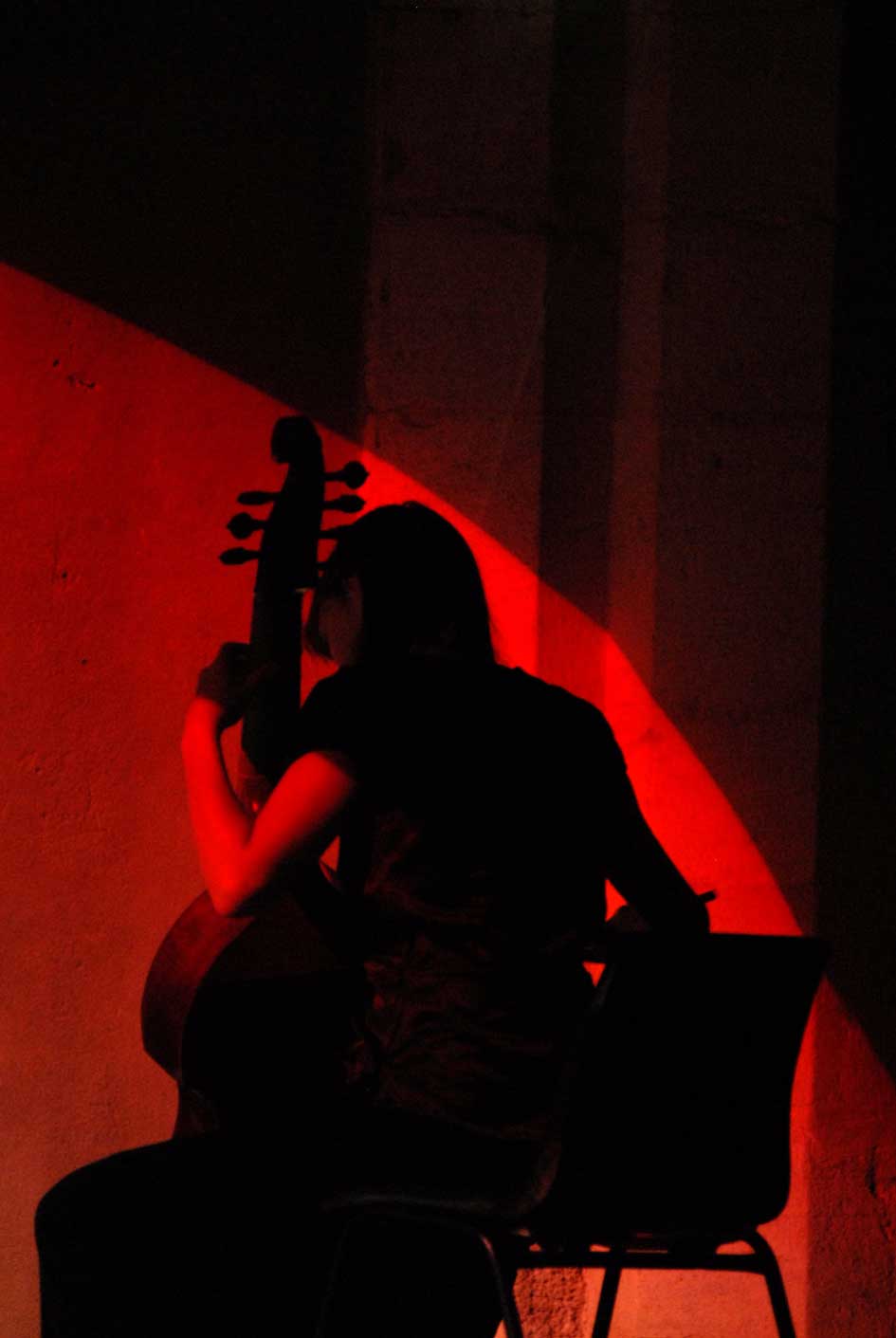
Photo from EME festival, Setubal, Portugal, 7th October 2006, by Rui Minderico: my first time playing the gamba live!
MIX RETROSPECTIVE – PAST PRESENT FUTURE 2005 MIX
October 30, 2020 § Leave a comment
This fourth mix was made for the release of The Golden Morning Breaks in 2005, and it’s probably the most eclectic I’ve ever made, pointing both to my past and future music. Hip hop definitely influenced Everyone Alive Wants Answers, and I’m surprised it took me so long to feature hip hop in one of my mixes (that GZA song…). The viola da gamba piece by Carl Friedrich Abel is one of my favourite pieces for viola and influenced my decision to buy the instrument and make Les Ondes Silencieuses. African music has been crucial to the way I play my string instruments, especially my treble viola da gamba (for instance on 2013’s The Weighing of the Heart). The Gamelan Son of Lion song is part of my long-standing love for anything gamelan, and you can hear gamelan’s echoes in so much of my music… As for Lee Perry’s “Roast fish and corn bread”, it’s a very special song for me: in the early 80s, my parents miraculously bought a Jamaican compilation tape, mostly made up of some seriously weird and powerful Perry productions from his best period, and that’s how I was introduced to the best of Jamaican music at a very young age, on long road trips!!! This of course resurfaced in 2015’s Captain of None.
Gamelan Son Of Lion « Sleeping Braid » ( From The Complete Gamelan In The New World Performed By Gamelan Son Of Lion)
Loobke « Adhd »
Magnetic Fields « Josephine »
Steffen Basho-Junghans “Smiling Penguins”
Dimi Mint Aba And Khalifa Ould Eide « Yar Allahoo »
Movietone « The Sand And The Stars »
Vashti Bunyan « Train Song »
Pg Six « Introduction (Letter To Lilli St.Cyr) »
Bridget St John « Autumn Lullaby »
Tiémoko Sissokho « Diagha » Sénégal – Kora Malinké
Björk « Amphibian »
Roots Manuva « Movements »
Harry Partch « Two Studies On Ancient Greek Scales 1 »
East Flatbush Project « Tried By Twelve »
GZA « Liquid Swords »
Martha And The Vandellas « Jimmy Mack »
Jan Bradley « Mama Didn’t Lie »
Brenda Holloway « When I’m Gone »
Lee Perry « Roast Fish And Cornbread »
Carl Friedrich Abel “5 pieces in D minor”
Love “Alone again or”

Photo from Tanned Tin Festival, Castellón, Spain, 5th November 2005, by Zoe T Vizcaino
MIX RETROSPECTIVE – 2004 Lie down and close your eyes
October 26, 2020 § Leave a comment
This very quiet hour-long mix done while working on my second album The golden morning breaks spans even more genres and decades than the previous ones, though its geographical area is restricted to Western music (apart from Hamza El Din). France is featured three times – incredible by my standards! – and the Django Reinhardt is from a 7’ that belonged to my mum (there was a cable problem while I transferred it digitally – this was before these things could be done easily  ).
).
Mark Fry « Dreaming With Alice – Verse 1 »
Duke Ellington « Fleurs Africaines »
John Cage « Sonata 1 » (Sonatas And Interludes For Prepared Piano)
Barbara « Gottingen »
Django Reinhardt « Minor Swing »
United States Of America « Cloud Song »
Rachel’s « Honeysuckle Suite »
Rolling Stones « Lady Jane »
Animal Collective « Doggy »
Hamza El Din « Munshah »
Delia Derbyshire « Blue Veils And Golden Sands »
John Barry « Mountains And Sunsets » (You Only Live Twice)
This Mortal Coil « Another Day »
Anne Laplantine « Hambourg » 1
Skip James « Devil Got My Woman»
Catpower « Sophisticated Lady »
Stone Poneys « Evergreen Part 2 »
Nico « These Days »
Half Asleep « The Twilight Was Probably Right »
Supreme Dicks « Blue Elephant »
Half Asleep « Tu Sens Le Sommeil Et Les Larmes »
Mark Fry « Dreaming With Alice – Verse 9 /10 »
 colleen